Trusted by 50,000+ dog owners — breed-specific training that actually works See the Training Program →
Training Equipment — complete dog training methods guide

Training Equipment

Dog training equipment is over-marketed and under-essential. Most successful training requires a small handful of basic tools — and most expensive specialty equipment is either unnecessary or actively counterproductive. This guide covers what you actually need versus what marketers want you to buy.

The Training Program We Recommend

Built on positive reinforcement methods. Used by 50,000+ dog owners. Lifetime access.

See the Training Program

What You Actually Need

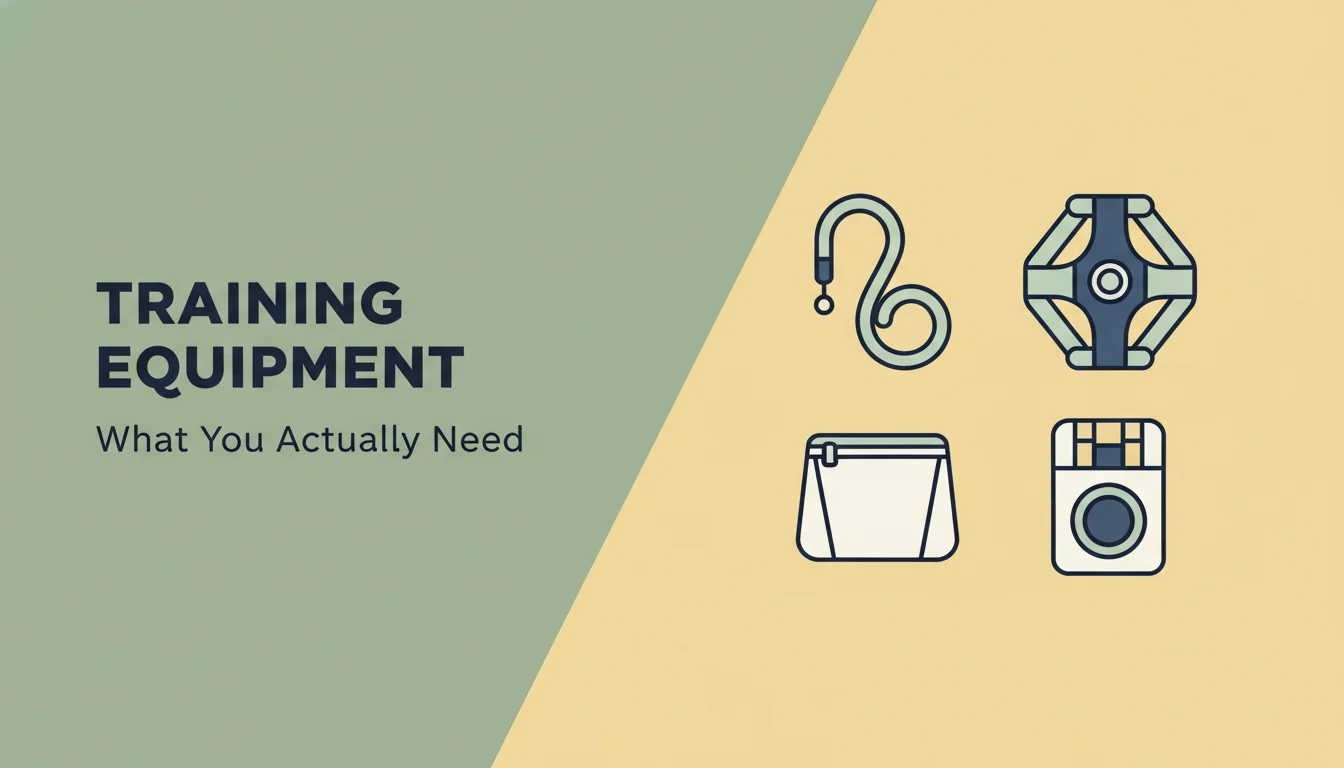
A 6-foot flat leash (nylon or leather). A well-fitted flat collar OR a front-clip harness if your dog pulls. High-value training treats (real meat, freeze-dried liver, or commercial training treats — small pieces). A treat pouch that attaches to your belt. Optional but highly recommended: a clicker. Optional for distance work: a 20–30 foot long line. Total cost: under $50 for everything.

What to Avoid

Retractable leashes — they teach pulling. Shock collars and prong collars — they cause more behavioral problems than they solve in most dogs. "Anti-bark" devices — they don't address the cause of barking. Most expensive specialty gear (electronic training collars, "dominance" tools) — they're not necessary for effective training. Basic equipment used consistently outperforms expensive equipment used inconsistently.

Breed-Specific Equipment Considerations

Strong/large breeds (Pitbulls, Mastiffs, Rottweilers): front-clip harness for early leash training. Brachycephalic breeds (Bulldogs, Pugs, French Bulldogs): harness rather than collar to avoid trachea pressure. Toy breeds (Yorkies, Maltese, Chihuahuas): properly sized harnesses (most regular dog harnesses are too large). Long-haired breeds (Goldens, Shih Tzus): step-in harnesses are easier to put on without coat tangling.
Frequently Asked Questions

What dog training equipment do I need?

Surprisingly little. A 6-foot leash, well-fitted collar or harness, high-value training treats, and a treat pouch. Optional but useful: a clicker. Optional for advanced training: a long line (20–30 ft).

Are shock collars effective?

Most positive-reinforcement trainers and major veterinary organizations recommend against shock collars. They suppress symptoms temporarily but often increase fear, aggression, and anxiety. Modern training science strongly favors reward-based methods over aversive equipment.

What's the best harness for dog training?

Front-clip harnesses (Easy Walk, Freedom Harness, PetSafe Walk-in-Sync) work best for dogs that pull. Standard back-clip harnesses can encourage pulling in some dogs. For brachycephalic breeds, any harness is preferable to a collar to avoid trachea pressure.

Ready to Start Training?

Step-by-step program with breed-specific guidance and lifetime access.

See the Program

Disclosure: We earn affiliate commissions when readers buy through some links on this site, at no extra cost to you. Our editorial recommendations are independent.