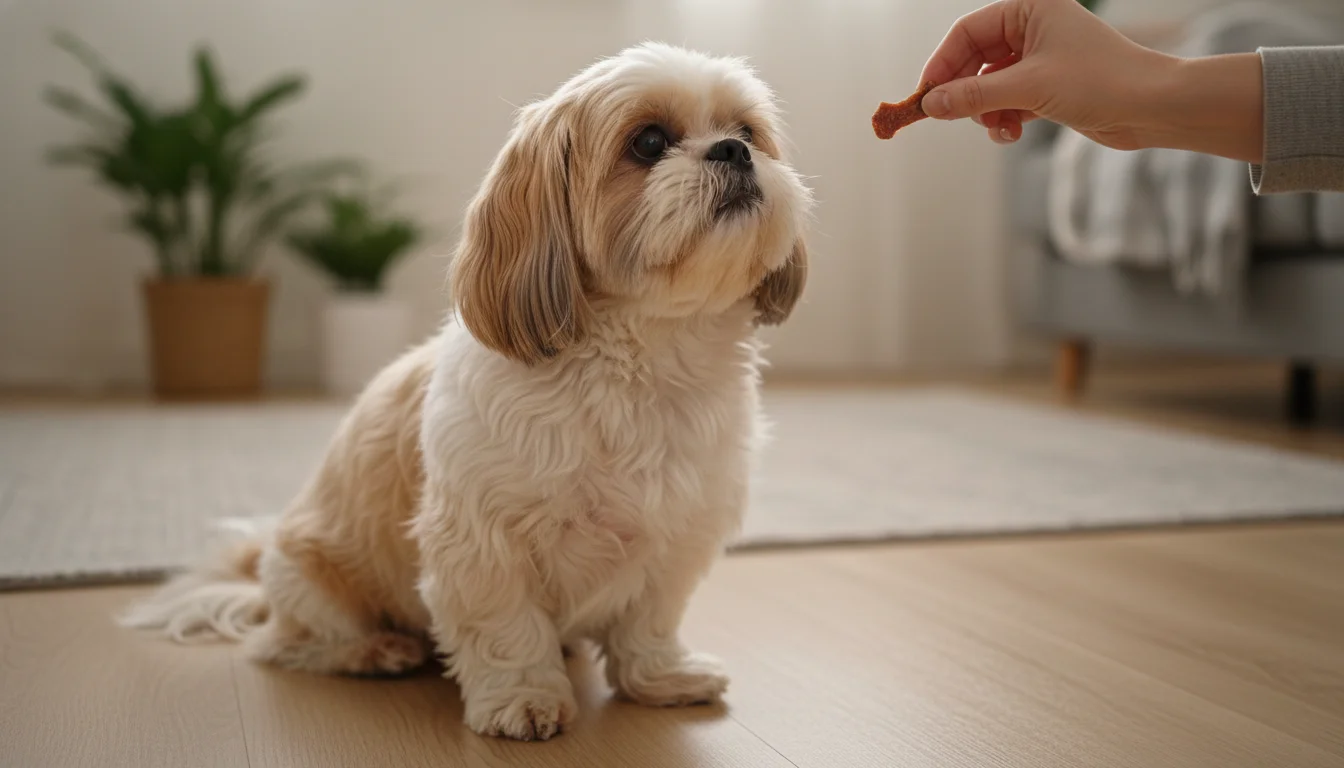
Shih Tzu training is often neglected because the breed is small, cute, and easy to pick up — meaning bad behaviors get tolerated instead of corrected. The result is a confident little dog with no manners, which is the source of most Shih Tzu "training problems." Trained properly, Shih Tzus are affectionate, well-mannered companions. Trained badly (or not at all), they bark constantly, refuse to walk on a leash, and pee wherever they want.
The Training Program Shih Tzu Owners Use
Step-by-step program designed for breed-specific challenges. Used by 50,000+ dog owners.
Most Shih Tzu behavioral problems come from one root cause: owners don't train them like real dogs. A 12 lb dog that lunges and barks at strangers is funny; a 50 lb dog doing the same thing isn't — but the behavior is identical. Train your Shih Tzu the same way you'd train a German Shepherd: consistent rules, clear expectations, no allowance for behaviors you wouldn't accept from a large dog.
Potty Training a Small Bladder
Shih Tzus have small bladders and slow potty training reputations. The fix is a strict schedule — puppies need outdoor breaks every 1.5–2 hours, immediately after eating, drinking, or sleeping. Crate train consistently. Reward outdoor success with high-value treats every single time. Avoid pee pads if you want full outdoor reliability — they teach the dog that indoor elimination is sometimes okay.
What Motivates a Shih Tzu
Food works for most Shih Tzus, but they're pickier than breeds like Labradors. Find a high-value treat (chicken, cheese, freeze-dried liver) and reserve it exclusively for training. Many Shih Tzus also respond well to praise and petting, especially since they crave human attention. Keep sessions short (5–8 minutes) and end on a success.
Shih Tzu Training Strengths
Affectionate and bonded to family
Generally easy to handle physically
Adapts well to apartment living
Shih Tzu Training Challenges
Slow to potty train (3–6+ months)
Often under-trained because of small size
Stubborn — won't work for low-value rewards
10-Week Shih Tzu Training Checklist
Track your Shih Tzu's progress through the foundational commands. Check each one as your dog reliably performs it in low-distraction environments.
Get the Complete Shih Tzu Training System
Breed-specific training program with day-by-day instructions, video demos, and lifetime access.
Frequently Asked Questions About Shih Tzu Training
Are Shih Tzus hard to train?
Moderately. They're intelligent but stubborn and easily distracted. The bigger problem is most owners under-train them because they're small and forgive bad behavior. Trained consistently, Shih Tzus learn basic obedience without much trouble.
How long does it take to potty train a Shih Tzu?
3–6 months for most puppies, with some taking up to a year for full reliability. Strict scheduling, crate training, and high-value rewards for outdoor success speed it up significantly.
When should I start training my Shih Tzu puppy?
8 weeks. Begin with name recognition, crate training, and potty schedule immediately. Add sit, come, and leash introduction in weeks 9–12. Socialization is critical — small dogs that aren't socialized often become reactive.
Why does my Shih Tzu bark at everything?
Lack of socialization, lack of training, or both. Shih Tzus aren't naturally excessive barkers, but under-socialized small dogs often develop reactive barking as a defense mechanism. Increase calm exposure to people, dogs, and environments, and reward quiet behavior.
Disclosure: We earn affiliate commissions when readers buy through some links on this site, at no extra cost to you. Our editorial recommendations are independent.