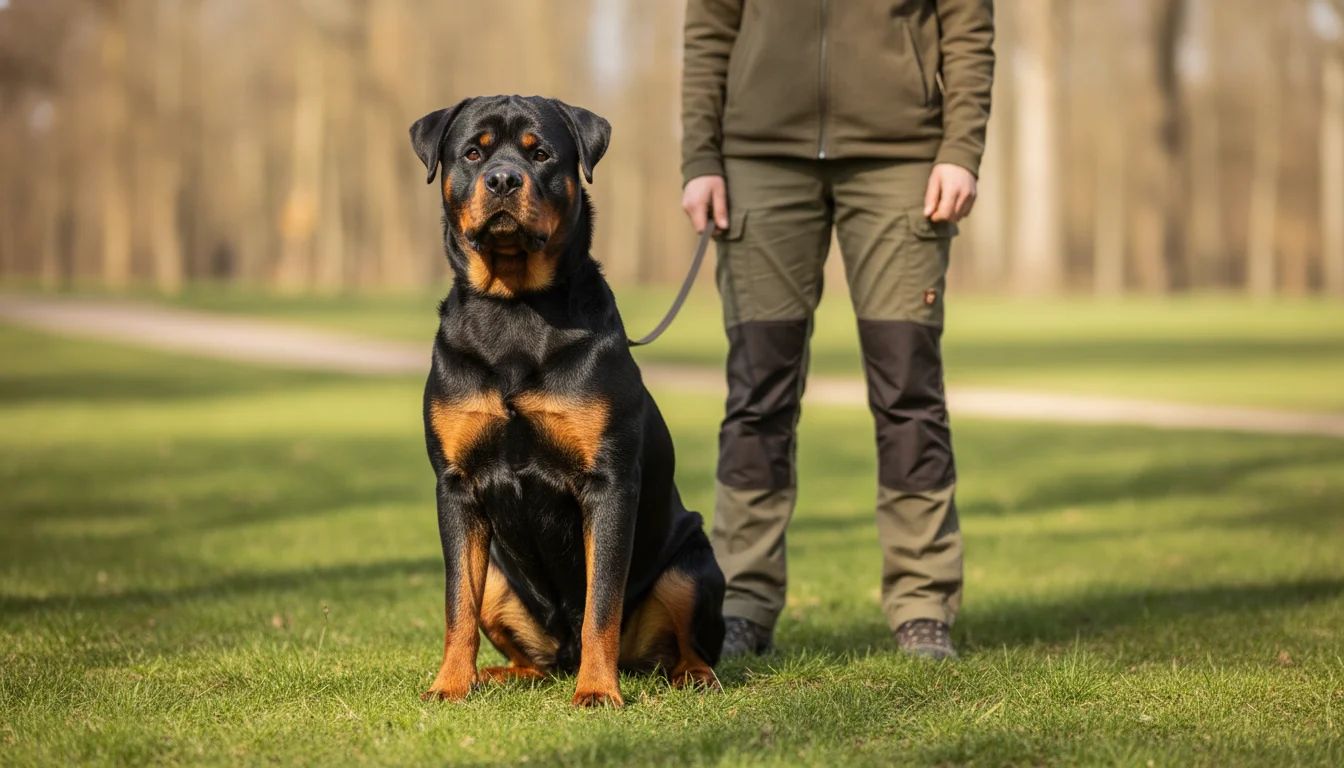
Rottweiler training rewards owners who understand the breed and frustrates those who don't. Rotties are confident, intelligent, and physically powerful — they require a handler who is calm, consistent, and unambiguous. They are not a beginner breed, but they are not the dangerous animals their reputation suggests. With proper training and socialization, Rottweilers are loyal, even-tempered, and exceptional family companions.
The Training Program Rottweiler Owners Use
Step-by-step program designed for breed-specific challenges. Used by 50,000+ dog owners.
Rottweilers are working dogs bred to make independent decisions. They need a clear hierarchy and predictable rules. Inconsistency — different family members allowing different behaviors, rules that change based on mood — creates a confused Rottweiler that pushes boundaries. Decide on house rules before the puppy arrives and enforce them identically across all household members from day one.
Socialization Is Non-Negotiable
An under-socialized Rottweiler is a liability — not because of inherent aggression, but because their size and protective instincts amplify any reactivity. Between 8 and 16 weeks, expose your Rottweiler to dozens of friendly people, calm dogs, novel environments, surfaces, and sounds. Continue socialization through adolescence (6–18 months) when many Rotties go through a fear period.
Training Methods That Work for Rottweilers
Modern positive reinforcement, with clear structure and consequences. Rotties are food-motivated and toy-motivated; pick the highest-value reward for the situation. Avoid harsh corrections — Rottweilers respond to firm leadership, not force. Aversive methods (alpha rolls, shock collars) increase reactivity and damage the relationship that makes Rottweiler training work in the first place.
Rottweiler Training Strengths
Highly intelligent — learns quickly
Loyal and bonded to family
Excels at obedience, protection sports, and structured work
Rottweiler Training Challenges
Not recommended for first-time owners
Requires intensive socialization through adolescence
Public perception means extra responsibility on owner
12-Week Rottweiler Training Checklist
Track your Rottweiler's progress through the foundational commands. Check each one as your dog reliably performs it in low-distraction environments.
Get the Complete Rottweiler Training System
Breed-specific training program with day-by-day instructions, video demos, and lifetime access.
Frequently Asked Questions About Rottweiler Training
Are Rottweilers hard to train?
Not for an experienced, consistent handler — they're actually very trainable (#9 in dog intelligence). They're harder for first-time owners because their size, strength, and confidence require leadership skills that take experience to develop.
When should I start training a Rottweiler puppy?
8 weeks. The earlier the better. Crate training, name recognition, and basic manners start day one. Socialization must begin immediately and continue through 16 weeks at minimum, ideally through adolescence.
Are Rottweilers good for first-time dog owners?
Generally no. Their size, strength, and the consequences of training mistakes are higher than with smaller, more forgiving breeds. First-time owners who do well with Rottweilers commit to professional training classes from puppyhood.
Do Rottweilers need a strong handler?
They need a consistent handler more than a strong one. "Strong" doesn't mean physically dominant — it means calm, predictable, and willing to enforce rules every time. Rotties test inconsistency relentlessly.
Disclosure: We earn affiliate commissions when readers buy through some links on this site, at no extra cost to you. Our editorial recommendations are independent.