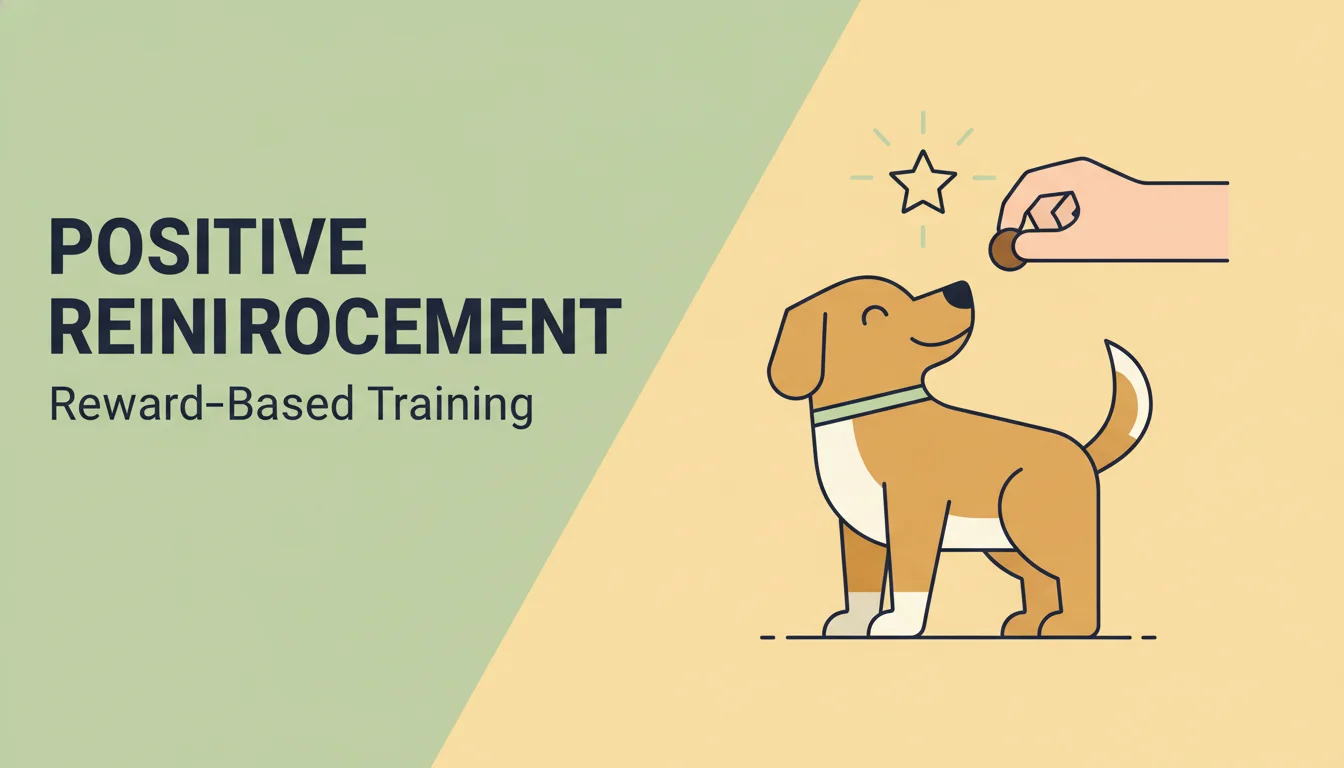
Positive reinforcement is the foundation of modern dog training. The principle is simple: behavior that's rewarded gets repeated. The execution is where most owners struggle. Knowing what to reward, when to reward, how to fade rewards over time, and what counts as a reward to your specific dog separates effective trainers from frustrated ones.
The Training Program We Recommend
Built on positive reinforcement methods. Used by 50,000+ dog owners. Lifetime access.
When a dog performs a desired behavior, you immediately mark the moment (with a clicker or verbal "yes") and deliver a reward within 1–2 seconds. The dog learns to associate the behavior with the reward and repeats it more frequently. Add a verbal cue once the behavior is reliable. Build duration and proof across distractions gradually.
Choosing the Right Reward
Most dogs work for food, but the value matters. High-value treats (real meat, cheese, hot dogs) work for difficult environments and new behaviors. Lower-value treats (kibble) work for known behaviors in low-distraction environments. Some dogs are more toy-motivated (Belgian Malinois, working-line shepherds). A few dogs (sensitive companion breeds) respond strongly to praise alone. Find what your dog values most.
Fading Rewards Over Time
Treats aren't forever. Once a behavior is reliable, transition to a variable reinforcement schedule — sometimes treat, sometimes praise, sometimes nothing. Variable schedules actually strengthen behaviors more than constant rewards (it's the same psychology that makes slot machines addictive). End-state: dog responds reliably to verbal cues with occasional treat reinforcement.
Frequently Asked Questions
Is positive reinforcement effective for all dogs?
Yes — positive reinforcement works for every breed, age, and temperament. The execution varies (high-value vs low-value treats, food vs toy motivation, session length) but the underlying principles are universal.
Do I have to use treats forever?
No. Treats are the fastest way to teach new behaviors. Once reliable, fade treats to a variable schedule and rely more on praise and play. Most well-trained dogs end up working primarily for praise with occasional food rewards.
What if my dog isn't food-motivated?
Almost all dogs are food-motivated when the right reward is offered. If your dog ignores kibble and biscuits, try real meat (chicken, beef, hot dog). If still uninterested, the dog may be stressed (not hungry) or you may be training in too distracting an environment. Try less distraction and higher value rewards.
Ready to Start Training?
Step-by-step program with breed-specific guidance and lifetime access.
Disclosure: We earn affiliate commissions when readers buy through some links on this site, at no extra cost to you. Our editorial recommendations are independent.