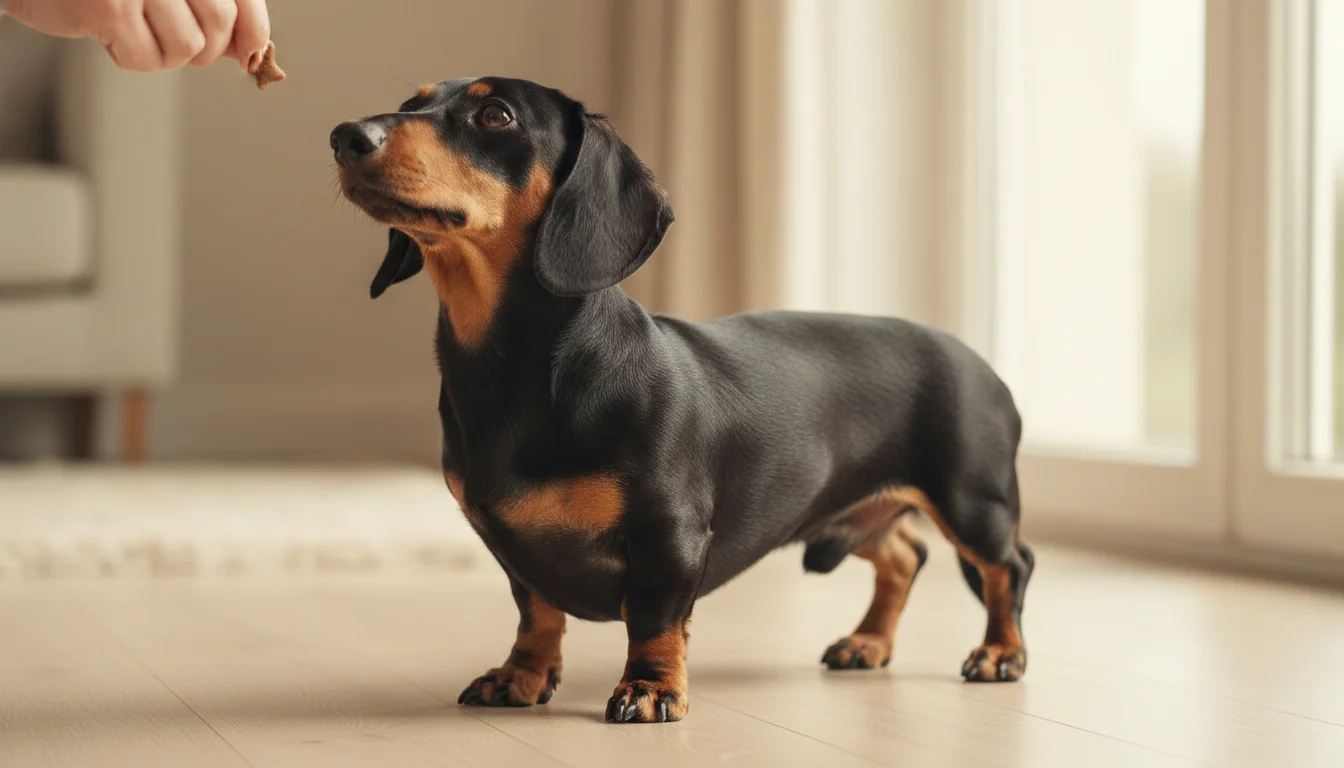
Dachshund training is harder than most owners expect. Dachshunds were bred to hunt badgers — independently, without human direction — and that "think for myself" trait is baked into the breed. Combined with notoriously difficult potty training and a tendency to be vocal, Doxies are not the easy small dog many first-time owners assume. The good news: they're smart and food-motivated, so success is achievable with the right approach.
The Training Program Dachshund Owners Use
Step-by-step program designed for breed-specific challenges. Used by 50,000+ dog owners.
Dachshunds are scent hounds bred to track and confront prey alone underground. They make their own decisions and ignore distractions to follow a smell. This means recall is unreliable, and they're easily distracted by interesting odors. Training works best in low-distraction environments first, with very high-value rewards. Build up to outdoor training only after indoor reliability is solid.
The Potty Training Challenge
Dachshunds are among the most difficult breeds to potty train — most owners report 4–6 months for reliability, with accidents continuing to 12 months. Use a strict schedule (every 2 hours for puppies), reward outdoor success heavily with high-value treats, and crate-train consistently. Avoid pee pads if possible — they confuse the "outside only" rule. Cold/rainy weather makes Doxies reluctant to go out, so plan for indoor accidents in winter.
Best Training Methods for Dachshunds
Positive reinforcement with high-value food rewards — Doxies will not work for kibble. Use real meat, hot dogs, or strong-smelling treats. Keep sessions to 5–10 minutes; Dachshunds tune out longer sessions fast. Avoid harsh corrections — they shut down and become more stubborn. Consistency matters more than session length: 3 short sessions daily beat 1 long session weekly.
Dachshund Training Strengths
Highly food-motivated for high-value treats
Loyal and bonded to family
Excels at scent work and earthdog activities
Dachshund Training Challenges
Notoriously slow to potty train
Recall unreliable due to scent drive
Vocal — barking is a breed trait
12-Week Dachshund Training Checklist
Track your Dachshund's progress through the foundational commands. Check each one as your dog reliably performs it in low-distraction environments.
Get the Complete Dachshund Training System
Breed-specific training program with day-by-day instructions, video demos, and lifetime access.
Frequently Asked Questions About Dachshund Training
Are Dachshunds hard to train?
Yes, harder than average. They're intelligent but independent and stubborn — bred to think for themselves. Basic obedience is achievable with patience; off-leash reliability is rarely realistic.
How long does it take to potty train a Dachshund?
Plan for 4–6 months of consistent training, with full reliability sometimes not occurring until 12 months. Doxies are slow potty trainers because of their independent temperament and small bladder size. Crate training and a strict schedule are non-negotiable.
When should I start training my Dachshund puppy?
8 weeks. Start with crate training and potty training immediately — these are the hardest areas. Add basic commands gradually. Keep all sessions short (3–5 minutes for young puppies).
Why does my Dachshund bark so much?
Barking is a breed trait — Dachshunds were bred to alert hunters to underground prey. Reduce excessive barking with consistent training (mark and reward quiet), adequate exercise, and managing triggers. Some baseline barking will remain.
Disclosure: We earn affiliate commissions when readers buy through some links on this site, at no extra cost to you. Our editorial recommendations are independent.