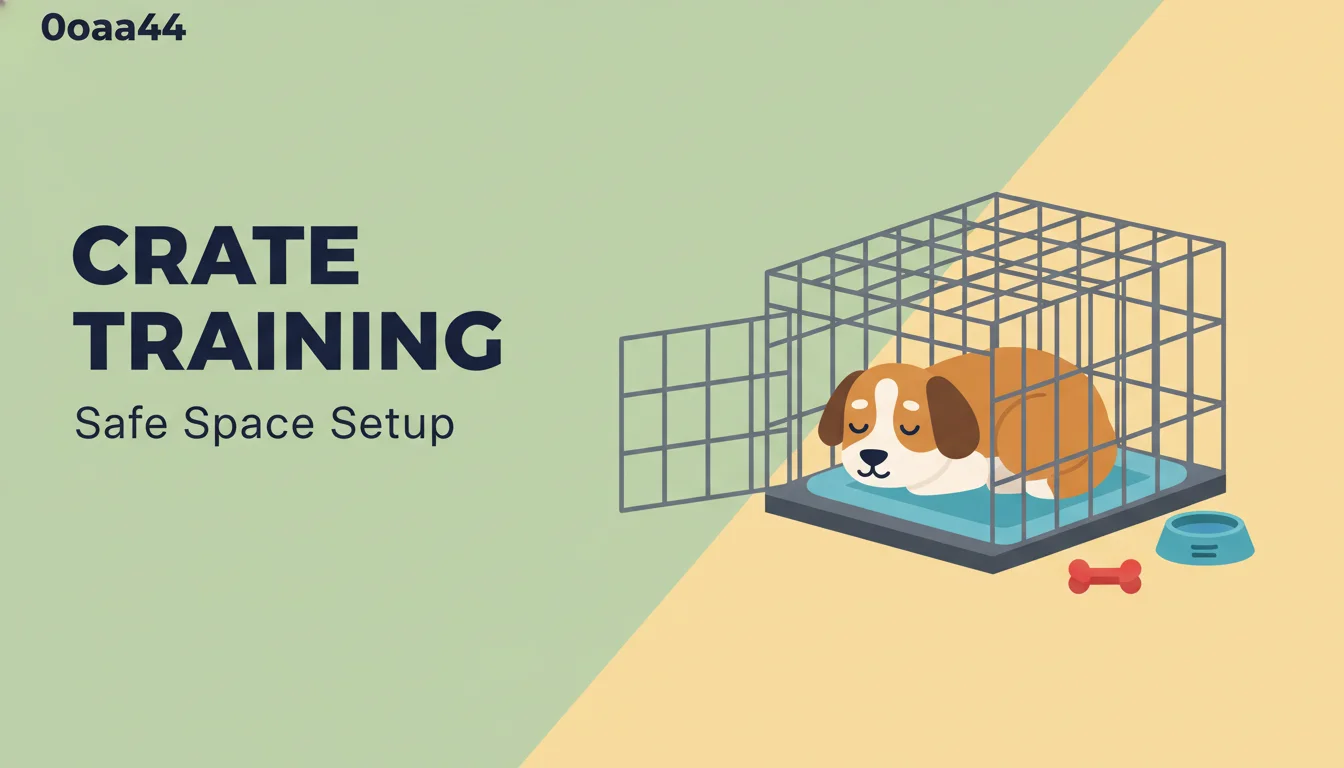
Crate training is one of the most useful skills you can teach a dog. A properly crate-trained dog has a safe space to rest, recover from stress, sleep at night, and travel safely. Crate training also accelerates potty training and prevents destructive behavior when you can't supervise. Done right, the crate becomes the dog's favorite place. Done wrong, it becomes a source of anxiety.
The Training Program That Covers This Topic
Step-by-step guidance for crate training and every other training challenge — used by 50,000+ dog owners.
The crate should be just big enough for the dog to stand up, turn around, and lie down comfortably — no bigger. Too much space encourages dogs to potty in one corner and sleep in the other, which defeats the potty-training purpose. For puppies, buy a crate sized for the adult dog with a divider that adjusts as the puppy grows.
The Crate Training Process
Day 1: Place the crate in a busy area, leave the door open, toss treats inside. Let the puppy explore at their own pace. Day 2–3: Feed meals inside the crate. Day 4–7: Begin closing the door for very short periods (30 sec → 1 min → 5 min) while the puppy is calm. Build duration gradually. Most puppies are crate-comfortable in 1–2 weeks of consistent training.
What NOT to Do
Never use the crate as punishment — the dog must associate the crate with safety and reward only. Never leave a puppy crated for longer than they can hold their bladder (puppies under 6 months should not be crated more than 4 hours at a stretch during the day). Never crate a dog that hasn't been gradually conditioned — sudden long crating creates panic and negative associations.
Frequently Asked Questions
Is crate training cruel?
No — properly conditioned, the crate is a positive space for the dog. Cruelty comes from misuse: using the crate as punishment, leaving the dog crated for excessive periods, or forcing a non-conditioned dog into a crate suddenly.
How long can I leave my dog in a crate?
Puppies: max 1 hour per month of age (a 3-month-old puppy = 3 hours max). Adult dogs: 4–6 hours during the day, 8 hours overnight if conditioned. Adults should not be crated 8+ hours daily on a regular basis.
What if my dog cries in the crate?
Brief crying is normal during conditioning. Don't reward crying by letting the dog out — wait for a quiet moment, then open the door. If crying continues for 30+ minutes, the conditioning was rushed; back up to shorter durations and rebuild gradually.
Ready to Get Started?
Complete training program with lifetime access. Covers crate training and every other training topic.
Disclosure: We earn affiliate commissions when readers buy through some links on this site, at no extra cost to you. Our editorial recommendations are independent.