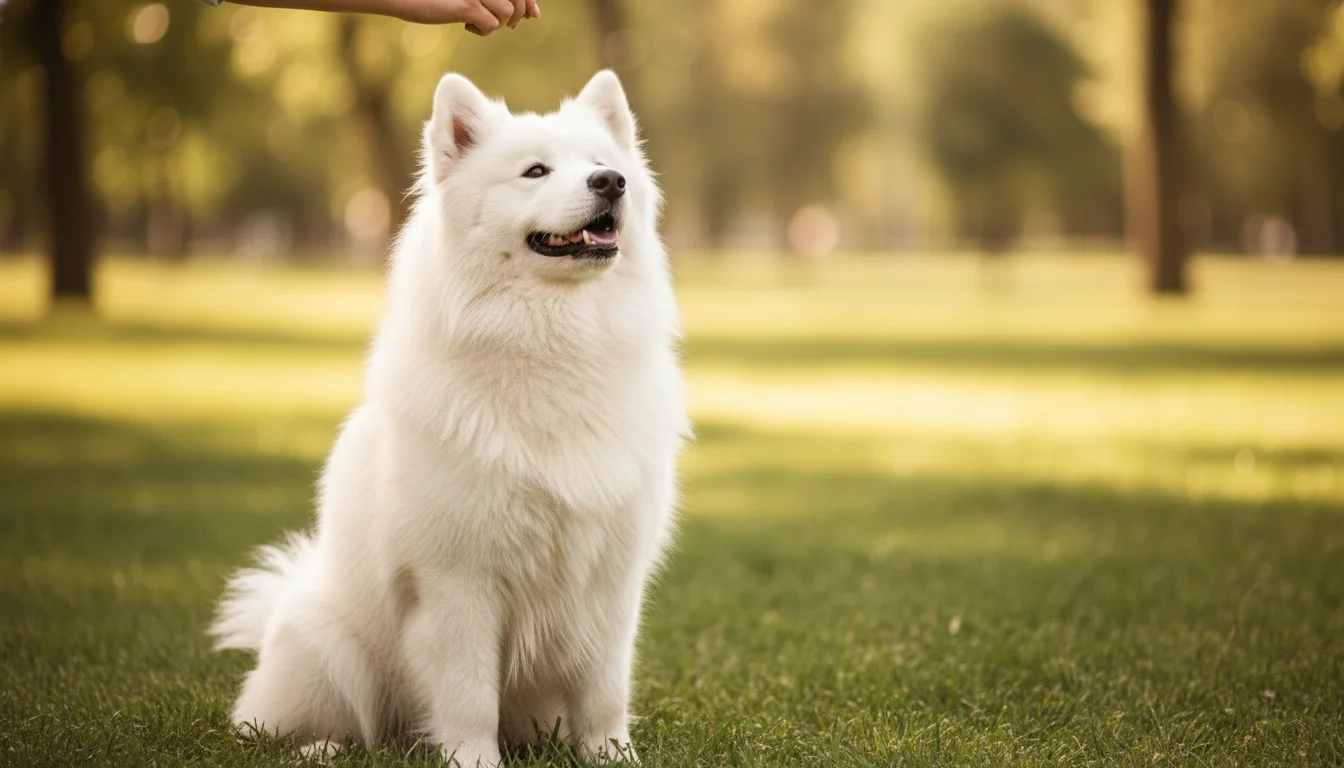
Samoyed training is more challenging than the breed's friendly appearance suggests. Sammies were bred to herd reindeer and pull sleds in Siberia — they're independent, energetic, and vocal. They want to be your partner, not your subordinate. Training works when you make it fun and worth their while.
The Training Program Samoyed Owners Use
Step-by-step program designed for breed-specific challenges. Used by 50,000+ dog owners.
Samoyeds were bred to make their own decisions in extreme conditions. That genetic independence shows up in training as "optional compliance" — they understand the command, they just don't see why they should follow it. Build engagement with high-value rewards and varied training to keep them interested.
Managing Sammie Vocalization
Samoyeds are vocal — they bark, "sing," and have plenty to say. Train a "quiet" cue early by marking and rewarding moments of silence. Provide enough exercise (under-exercised Sammies are louder) and mental stimulation. Some baseline vocalization is breed-typical and won't fully go away.
Best Methods for Samoyeds
Positive reinforcement with high-value treats and play. Sammies are sensitive — harsh corrections backfire and damage the breed's sweet temperament. Keep sessions short (10 min), high-energy, and varied. Most Sammies respond well to clicker training due to their problem-solving intelligence.
Samoyed Training Strengths
Friendly with people and other dogs
Beautiful, sweet temperament
Excels at sled work, herding, and agility
Samoyed Training Challenges
Independent — moderate compliance motivation
Vocal — barking is breed-common
Heavy seasonal shedding
12-Week Samoyed Training Checklist
Track your Samoyed's progress through the foundational commands. Check each one as your dog reliably performs it in low-distraction environments.
Get the Complete Samoyed Training System
Breed-specific training program with day-by-day instructions, video demos, and lifetime access.
Moderately difficult. They're intelligent but independent, and they don't naturally seek to please humans for its own sake. With high-value rewards and patience, basic obedience is achievable; off-leash reliability is rarely realistic.
How do I stop my Samoyed from barking so much?
Train a "quiet" cue early, ensure adequate exercise (1.5+ hours daily), provide mental stimulation, and manage triggers. Some breed-typical vocalization will remain — Sammies were bred to alert hunters.
When should I start training my Samoyed puppy?
8 weeks. Begin with crate training, name recognition, sit, and recall in low-distraction environments. Socialization is critical — under-socialized Sammies can become reactive.
Are Samoyeds good for first-time owners?
Borderline. Their friendly temperament suggests yes, but the independence and exercise needs surprise many first-time owners. Active owners with time for training and exercise do well.
Disclosure: We earn affiliate commissions when readers buy through some links on this site, at no extra cost to you. Our editorial recommendations are independent.